
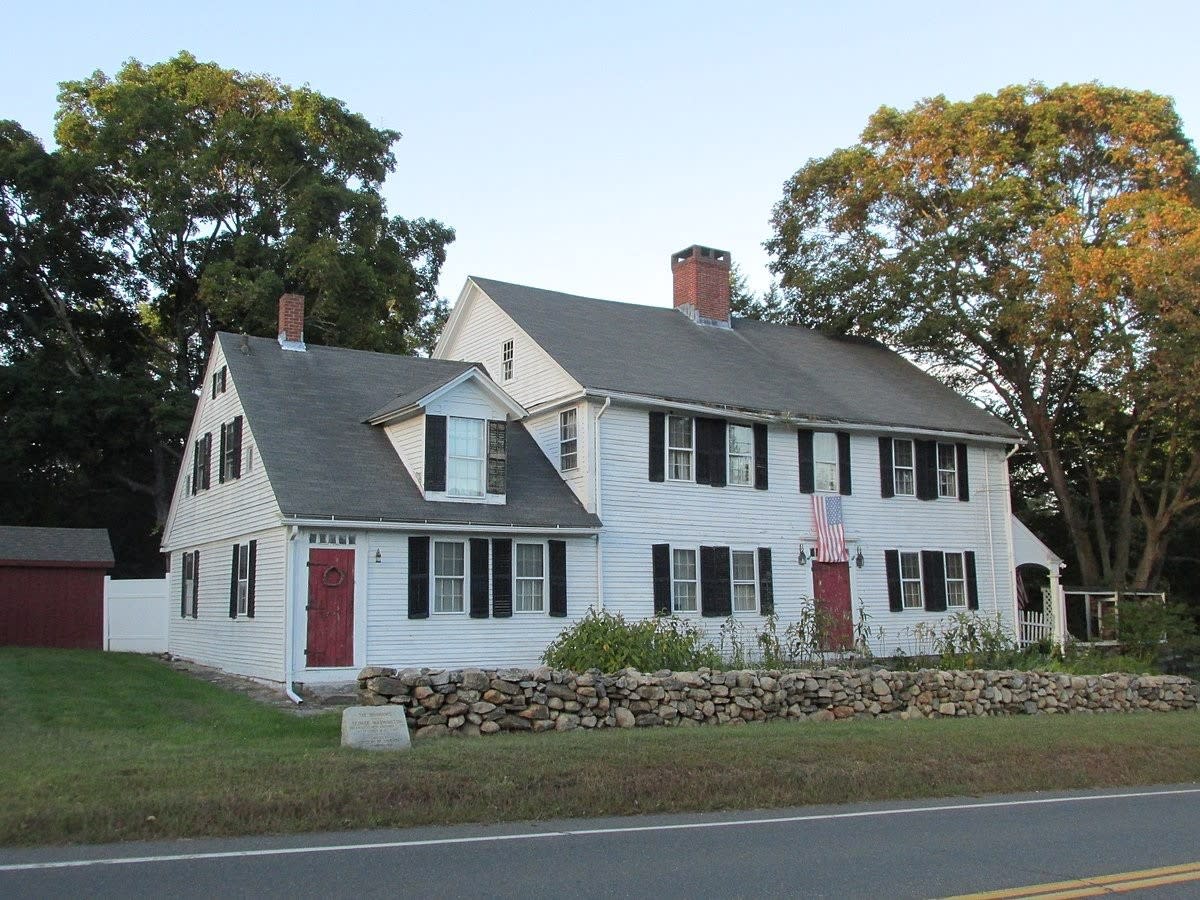
The Museum of Connecticut Glass at the Coventry Glass Factory Historic District — Coventry
The Coventry Glass Factory Historic District is a cluster of 10 historically significant 19th century homes — one of which houses The Museum of Connecticut Glass — near the site of the former Coventry Glass Factory, which was in operation from 1813 to 1845. Glass manufacturing was one of the earliest and most extensive in a series of industries that transformed Coventry from an agricultural community to one dependent upon both farming and manufacturing in the early 19th century. The Coventry Glass Factory produced bottles, inkstands, and flasks and is credited with creating the first “portrait flask,” which bore a depiction of the Marquis de Lafayette to commemorate his visit to the United States in 1825.
(Image via en.wikipedia.org)
The Fifth Camp of Rochambeau’s Infantry — Bolton
Also known as Site 12-25, the Fifth Camp of Rochambeau’s Infantry is one of the sites along the Washington–Rochambeau Revolutionary Route. This 13-acre site is where Jean-Baptiste Donatien de Vimeur, comte de Rochambeau and his French Army troops camped during their march to Yorktown in June of 1781. Today it is an archeological site where a large number of artifacts have been recovered, including numbered regimental buttons, .66 caliber musket balls, period coins, and a lead bar.

(Image via ctinworldwar1.org)
Brigham’s Tavern — Coventry
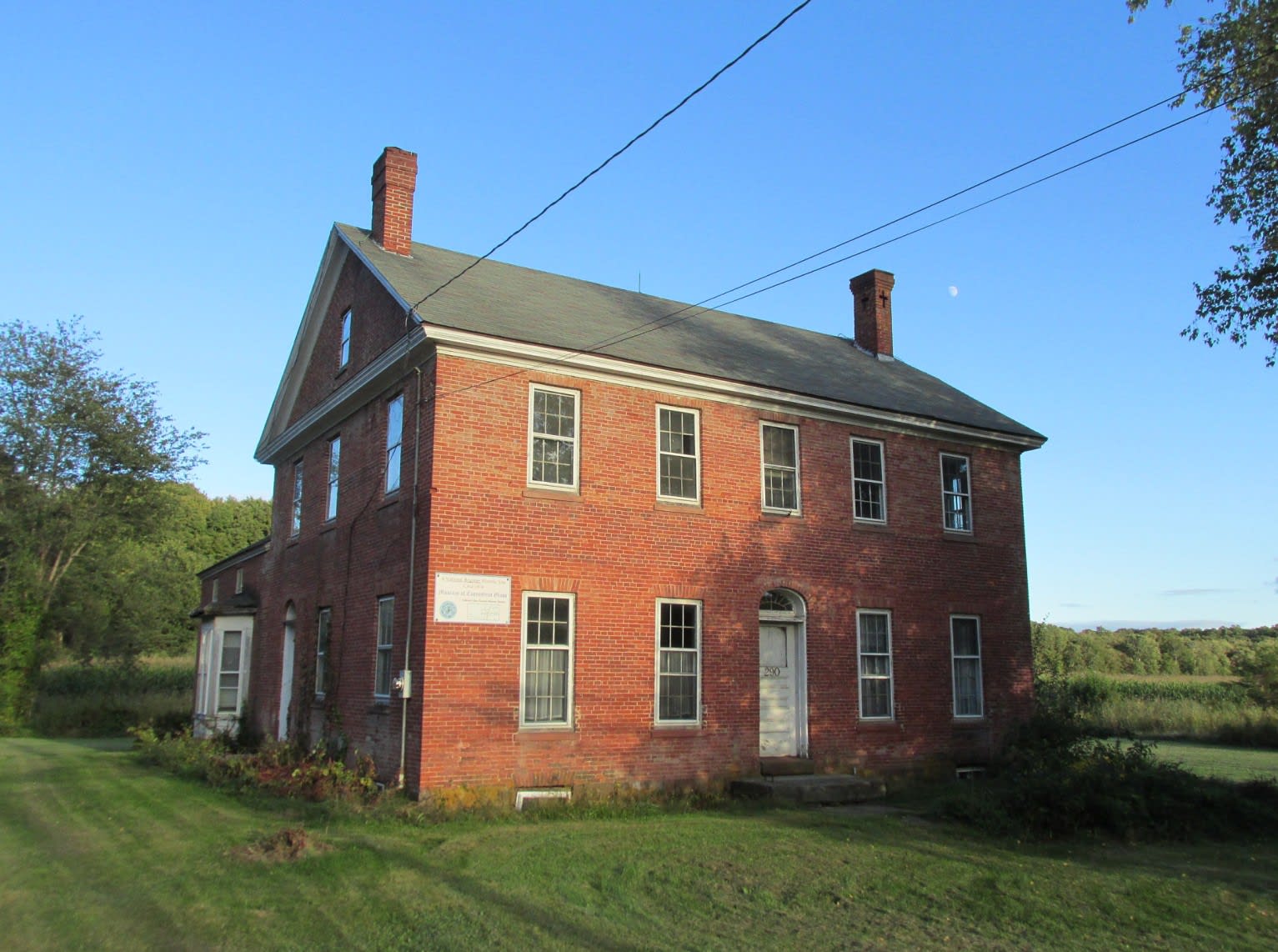
Constructed in the early 18th century, Brigham’s Tavern serviced travelers from 1778 into the 19th century. By far the most famous patron was George Washington, who stopped there for breakfast on November 9th, 1789 — a stone marker on the property commemorates this visit. The table on which George Washington ate breakfast is currently housed in the Nathan Hale Homestead in Coventry.

(Image via theclio.com)
Old Mansfield Center Cemetery — Mansfield
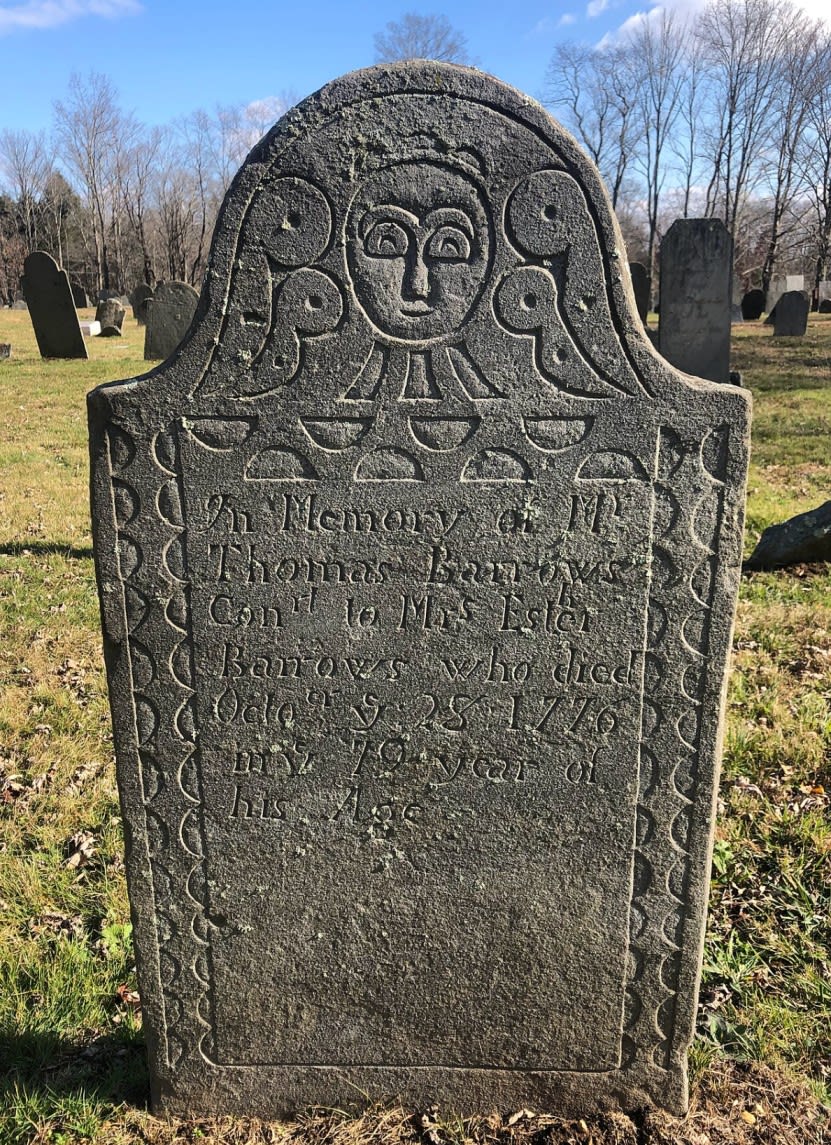
Established in 1693, the Old Mansfield Center Cemetery is one of the few surviving elements of Mansfield’s early Colonial settlement history. It contains many 18th century gravestones that are illustrative of the rich folk-artistic tradition of funerary stonecarving in colonial New England, with more than 180 of the stones being attributed to identifiable carvers. The oldest dated marker is for Exercise Conant, who passed in 1772.
(Image via en.wikipedia.org)
The Captain Nathan Hale Monument — Coventry
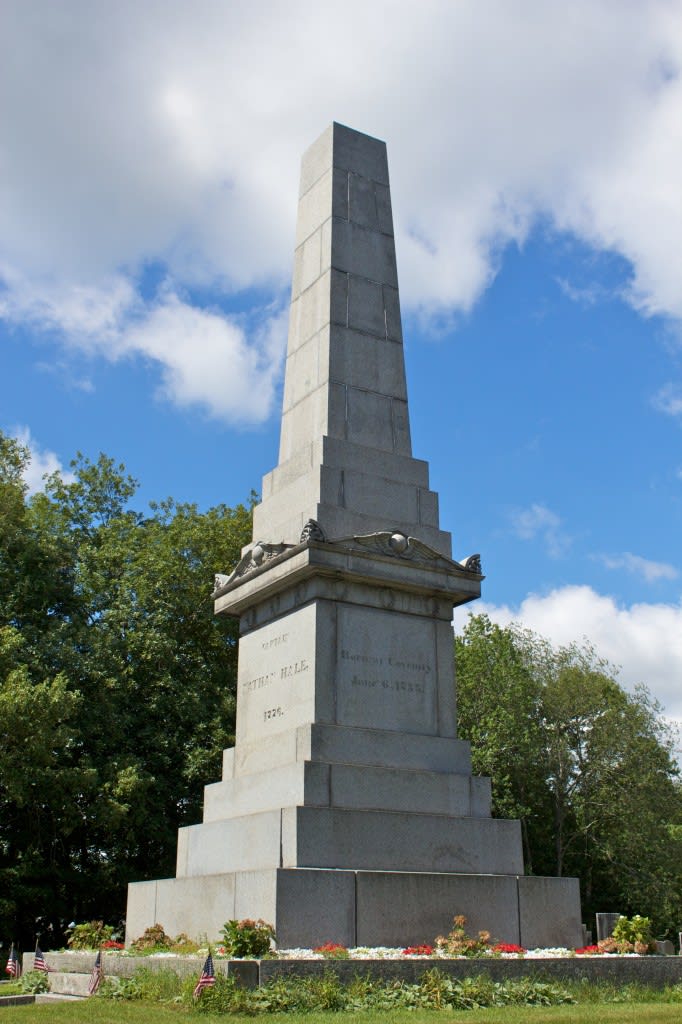
Built in 1846, a beautiful 45-foot-tall granite obelisk honors Revolutionary War hero Nathan Hale in his hometown of Coventry. The west face displays Hale’s final words, “I only regret that I have but one life to lose for my country.” Located near the entrance of the Nathan Hale Cemetery, the monument was one of the first large-scale monuments to commemorate an individual or event, preceding the Bunker Hill Monument and Washington Monument.
(Image via ctmonuments.net)
